TIME WARP – What does it mean to be German?
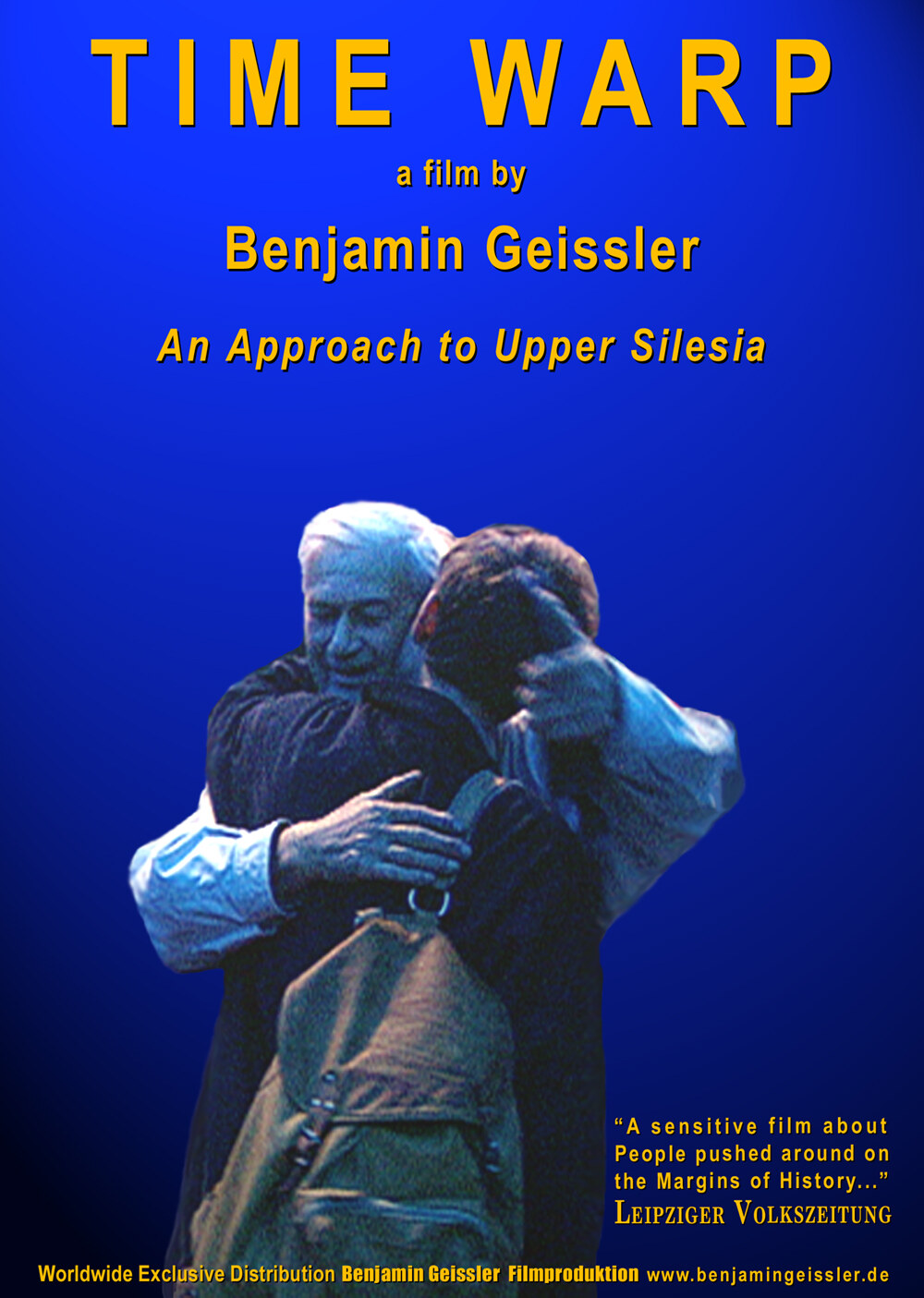
Film & Story
Between family history and the course of history
In 1988, 27-year-old Waldemar Spallek leaves the Polish People’s Republic to live in West Germany. His parents remain in their house in Kolonowskie, Upper Silesia. Until 1935, the village was called Collonowska; the National Socialists then renamed it Grafenweiler.
Kolonowskie lies in a part of Poland that some still regard as Germany’s former eastern territories. Warsaw is about 290 kilometres away, Berlin 440, Prague 330 – and Auschwitz just 80.
Ten years after Waldemar’s departure, much water has flowed down the Oder. A deeply personal family journey back to the places and people of his childhood begins.
Between the beehouse and family celebrations, the village school and the parish house, German, Polish and Silesian worlds meet. Memories and convictions collide; the familiar suddenly appears in a different light.
What does it mean to be German?
With openness, humour and startling contradictions, people talk about their lives and their homeland. Yet the journey also leads to an intense, spontaneous and emotional confrontation, face to face, between father and son.
TIME WARP is an unusually intimate documentary portrait of origins, belonging and the persistence of the past in the present.
Background
When borders move and people stay
After the Second World War, Poland’s borders shift westwards. Many families of German descent remain in Upper Silesia, while others are expelled. At the same time, Polish resettlers arrive from the former eastern territories, including Eastern Galicia.
Decades later, their descendants live side by side. But their memories of war, expulsion and lost homes differ profoundly. Even today, some Silesians of German descent speak of travelling to Germany as going “do Reichu” – “to the Reich”.
A casual expression in which an entire century still resonates.
People
One family. Many truths.
Elisabeth and Georg Spallek have built a home in Kolonowskie. Their sons, Waldemar and Sebastian, have moved to Germany. When the family comes together, there is laughter, argument and talk about things long left unsaid.
Waldemar’s former caregivers Agnes and Rosa, his teacher Mrs Konieczko, Father Globisch and other villagers speak with remarkable candour about their experiences.
With a keen eye for the unexpected, TIME WARP captures moments when ordinary conversations suddenly turn into deeply personal confrontations. Humour and warmth often coexist with deeply rooted prejudice.
Locations
Two places. Two perspectives on Germany.
In Saarbrücken, film scholar Waldemar Spallek works at the Kino 8½ cinema, which presents the film programme accompanying the Wehrmacht exhibition. Public debate about the Nazi past is part of his professional life.
In Kolonowskie, the Upper Silesian village of his childhood, he encounters that same past in a very different form: family albums, passing remarks and memories that remain vivid.
Between cinema and family home, a tension emerges that makes TIME WARP far more than a film about returning home.
Crew & Production
Concept, direction, editing: Benjamin Geissler · Cinematography: Benjamin Geissler, Marian Czura · Sound: Marek Śląski, Peter Stockhaus · Assistant directors: Sandra Ewers, Nadia Malverti · Music: Guglielmo Pagnozzi · Sound mix: Studio Funk, Markus Braack · Production management: Peter Stockhaus · Commissioning editor: Hans Kutnewsky, ZDF – Das Kleine Fernsehspiel · Production: Benjamin Geissler Filmproduktion · Co-production: ZDF · Funding: Filmförderung Hamburg, Niedersächsische Filmförderung
Festivals & Awards
Proposed for the GERMAN FILM AWARD 2000 · Nominated for PRIX EUROPA – IRIS 2000, Multicultural Television Programme of the Year
AWARD of the Festival Director (Slovakian Filminstitute, Bratislava) – XI. Etnofilm Festival, Čadca, SK 2000
International Documentary Film Festival Leipzig (1999) · Max Ophüls Prize, Saarbrücken · Independent Film Days, Osnabrück · Inventur 7 – Lower Saxony Film Showcase, Hanover · International Documentary Film Festival Munich · International Documentary and Short Film Festival, Kraków · SaarLorLux Film and Video Festival · “Der neue Heimatfilm” Festival, Freistadt · 4th International Ethnic TV Festival AT HOME, Kraków · International Festival of Documentaries on Regions, Zabrze · XI Etnofilm Festival, Čadca (all 2000 unless otherwise stated)
Press & Reviews
“A sensitive film about people pushed around on the margins of history and the traumas they have never overcome.”
Ralph Gambihler, Leipziger Volkszeitung (translated)
“A courageous film that moves audiences and challenges prejudices.”
Saarländischer Rundfunk (translated)
“We are merely an embarrassment to high politics.”
Barbara Sichtermann, DIE ZEIT (translated)
“Geissler’s film may provoke controversy on both sides of the Oder.”
Margarete Wach, Filmdienst (translated)